

What Is the Temple Mount Sifting Project?
The short answer: what the Temple Mount Sifting Project is
The Temple Mount Sifting Project is an archaeological project in Jerusalem that sifts and studies earth removed from the Temple Mount in 1999. Archaeologists and volunteers from Israel and abroad sort the soil by hand, and the finds are documented and stored for scientific publication. According to the project, sifting has been under way since 2004.
Key facts at a glance, as reported by the project on tmsifting.org:
-
What it sifts: Earth removed from the Temple Mount in 1999.
-
How long: Sifting has run since 2004, which the project’s site describes as 21 years.
-
Progress: 4,742 of an estimated 5,210 tons of earth sifted so far.
-
Finds: 635,378 artifacts uncovered and awaiting publication in archaeological reports.
-
People: Over 200,000 volunteers from Israel and abroad have taken part.
-
Where: Mitzpe HaMeshoshim, on Mount Scopus in Jerusalem.
Why the project exists
The Temple Mount has been a site of continuous human activity for thousands of years, and the ground beneath it holds layers of Jerusalem’s history. In 1999, large quantities of earth were removed from the site during work there. That earth was not examined archaeologically at the time, and it carried material from many periods.
The Temple Mount Sifting Project was created to examine that soil. Its stated aim, in its own words, is to “preserve, research, and publish” the archaeological evidence it contains. According to the project, sifting has run since 2004.
This article describes the project’s work. It does not take a position on the political or religious debates over the events of 1999, and neither does Moriah. What the project does is simple to state: it takes soil that might have been lost and turns it into documented finds.
How the sifting works, step by step
The project is a crowdsourced archaeological effort. Professionals set the standards and volunteers do much of the hands-on sorting. In outline, the process runs like this:
-
The earth is brought to the sifting site. The project works at Mitzpe HaMeshoshim, on Mount Scopus in Jerusalem.
-
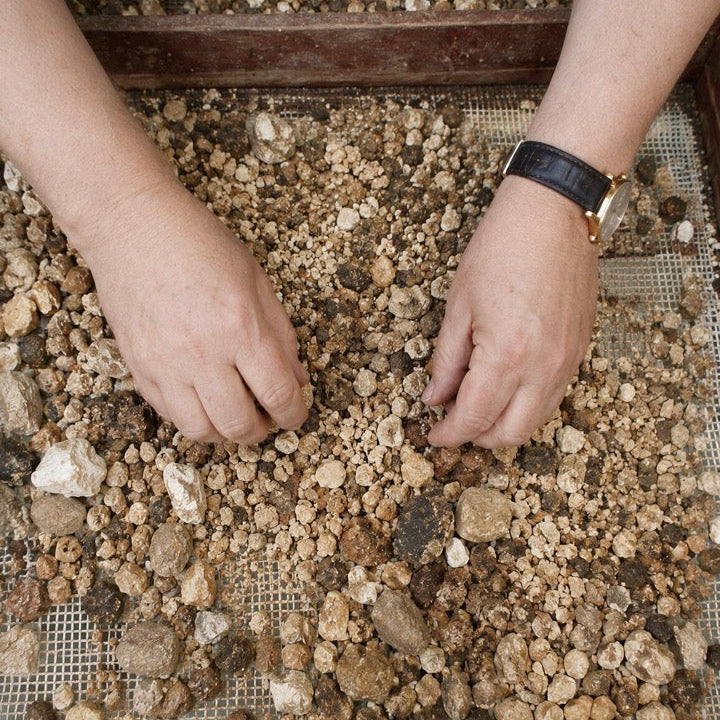
Volunteers sift it by hand. The soil is passed through screens, usually with water, so that small objects are left behind.
-
Finds are separated from the soil. Pottery, stone, metal, glass, bone, coins and other objects are picked out and sorted.
-
Specialists examine what is found. Experts identify and date the finds.
-
Everything is documented and stored. Finds are recorded and kept in the project’s warehouses until they can be published scientifically.
-
Technology helps process the backlog. The project says it uses data analytics and AI to process unsorted artifacts.
The pace is slow by design. Careful sorting is what turns a bucket of soil into evidence, and the project’s own figures show how much remains: 4,742 of an estimated 5,210 tons have been sifted.
What the project has found
The soil has turned out to hold material from many periods of Jerusalem’s history, and the project’s volume of finds is large: 635,378 artifacts are waiting to be published in archaeological reports, according to the project.
The project highlights individual discoveries in a regular “Find of the Month” feature on its site. Recent examples include a rare gold bead from the First Temple period, a seal impression stamped “LMLK,” and a rare coin bearing the portrait of an emperor. Each is a small object, and each is evidence of who lived, traded and worshipped around the Temple Mount.
The finds come from everyday life as well as ceremony: pottery, tools, jewelry, coins and building stone. That is what makes sifting valuable. A single fragment can be unremarkable, but thousands of fragments, read together, add up to a record of the site that would otherwise not exist.
You can follow the project’s current discoveries at tmsifting.org.
Who takes part, and how to join
Volunteers are central to the project. The project reports that over 200,000 volunteers, Israelis and visitors from abroad, have taken part. People from every background sift side by side, which is part of what the project is known for.
If you would like to take part, the project invites visitors to join the sifting through its participation page at tmsifting.org/participate. Bookings are handled by the project, so check that page for current availability, requirements and how to reserve a place.
For most travelers, sifting is a short, hands-on stop on a trip to Jerusalem, and many describe it as the moment the city’s history became tangible. Anyone planning a visit can arrange to sift and then visit the Old City gallery where Moriah’s jewelry is made.
How Moriah connects to the project
Moriah’s stones come from material recovered through the Temple Mount Sifting Project. Each piece is set with an authenticated stone and comes with a certificate of origin, and the stone is rescued, not carved. It was removed from the ground and recovered, and it is set in gold today.
The link is personal as well as commercial. Moriah’s founder, Avi Tavisal, takes part in the sifting himself. And 10% of every Moriah purchase funds the project’s ongoing work, so choosing a piece helps uncover the next fragment of Jerusalem’s history.
To see the stones, or to talk through a piece with the team, explore the Moriah Collection or book a private consultation by phone or video. Visitors to Jerusalem are welcome at the gallery and workshop in the Old City.
Frequently asked questions
What is the Temple Mount Sifting Project?
It is an archaeological project in Jerusalem that sifts and studies earth removed from the Temple Mount in 1999. Archaeologists and volunteers sort the soil, and the finds are documented and stored for scientific publication.
When did the sifting begin?
According to the project, sifting has run since 2004.
What has the project found?
The project reports 635,378 artifacts awaiting publication, including pottery, coins, seal impressions and jewelry from many periods.
Can visitors take part in the sifting?
Yes. The project invites visitors to join the sifting. Check its participation page for current availability and how to book.
How much earth has been sifted?
The project reports 4,742 of an estimated 5,210 tons so far.
How does Moriah relate to the project?
Moriah’s stones come from material recovered through the project, and 10% of every purchase funds the project’s work. Moriah’s founder takes part in the sifting himself.

Leave a comment
This site is protected by hCaptcha and the hCaptcha Privacy Policy and Terms of Service apply.